
8 April 2026
5 rules to pay attention to when choosing refrigerated transport for food
5 rules to pay attention to when choosing refrigerated transport for food
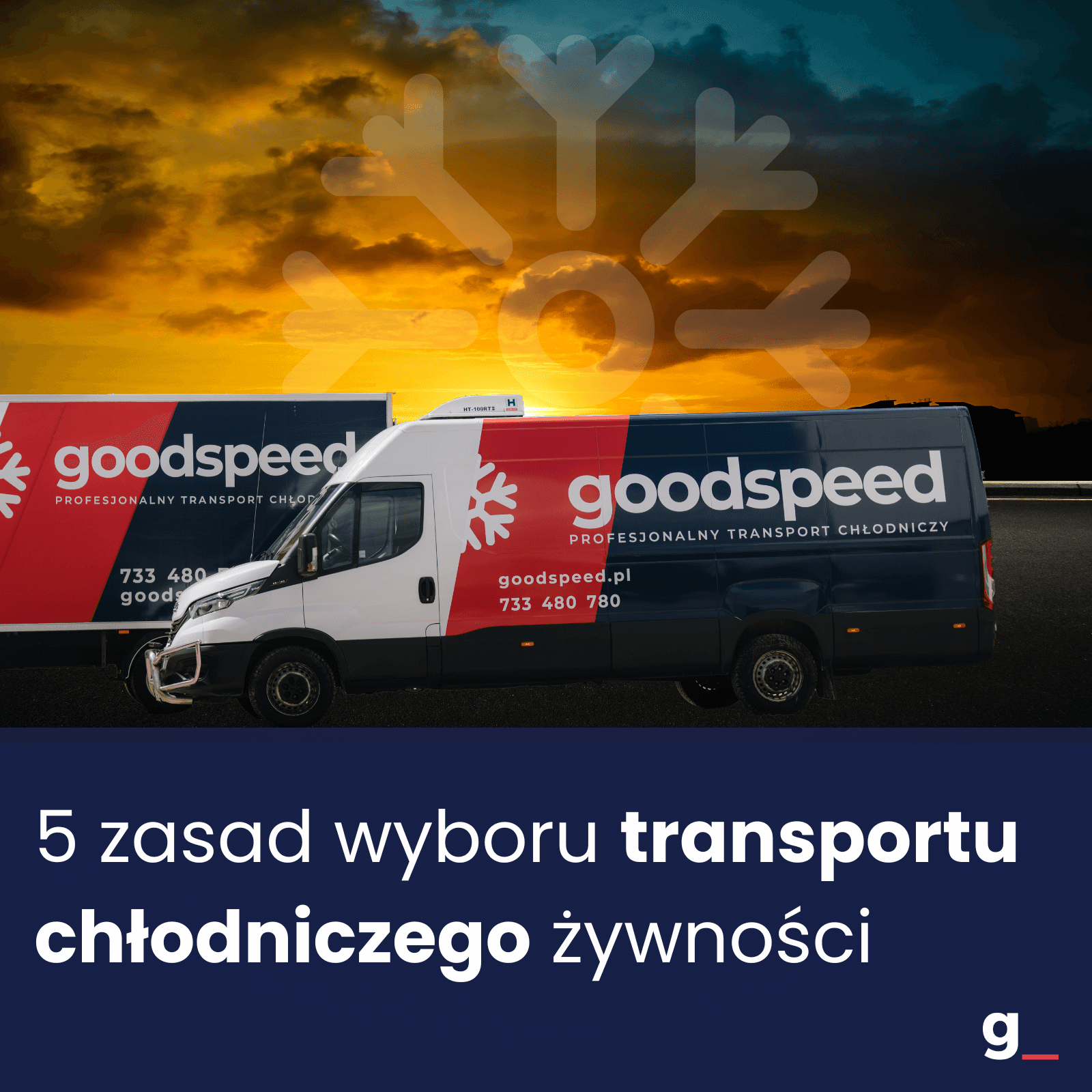
Producers of meal box diets and ready-to-eat food know that product quality does not end when preparation is complete. The cold chain, from the warehouse to the customer’s door, is just as important as the production process itself. How do you choose a partner for refrigerated food transport that you can trust?
1. A warehouse and chilled hub ensuring temperature continuity
The cold chain begins before the product even reaches the vehicle. A professional chilled hub should be designed so that the required temperature is maintained at every point where goods are received and dispatched - without breaks or temperature spikes. Key here are solutions that minimise air exchange during transhipment: airtight docks, rapid docking systems (airtight loading docks, gate systems that minimise air exchange), and optimal layout of loading zones. These are technical details, but their absence directly affects the quality and safety of the product that reaches the customer.
2. Controlled temperature throughout the entire journey - from warehouse to door (fleet)
The refrigerated fleet must reach the correct temperature before it collects the goods, not only once it is already on the road. For fresh food and meal box diets, the optimal range is around 2–6°C. In a standard van without a refrigeration unit, the cargo space can heat up to several tens of degrees. Importantly, in the case of direct-to-door deliveries, the vehicle is opened repeatedly, sometimes every few minutes, which places additional strain on the cooling system. Check whether the partner’s fleet of specialist refrigerated logistics vehicles is technically adapted for this.
3. Continuous monitoring as standard, not an option
We monitor the temperature level throughout the transport process. We pay attention to every fluctuation, even those caused by the door being opened for the next delivery — says Marcin Kichner, Chief Business Officer at Goodspeed. Maintaining the cold chain is not only about product safety, but also about giving the diet catering producer confidence that every delivery at a controlled temperature is carried out in line with the standard. This is especially important in the case of meal box diets prepared according to the customer's individual dietary requirements, where even a momentary temperature deviation can affect the composition, taste and nutritional value of the meal.
4. A contingency plan, because unforeseen situations always happen
A refrigeration unit failure, a blocked route, extreme weather conditions such as snowfall or flooding. Any of these scenarios can lead to a break in the cold chain and real losses, both financial and reputational. A good partner in refrigerated logistics has contingency procedures in place and does not leave the meal box diet producer to deal with the problem alone. Before you sign an agreement, it is worth asking directly: what happens in such a case and who is responsible?
5. Transparency and clearly defined terms of cooperation
An agreement with a partner responsible for deliveries at a controlled temperature should precisely define the delivery standards for direct-to-door shipments: what time the parcel reaches the recipient, how timeliness is measured, what the complaints process looks like, and who bears responsibility for any damage. For a diet catering producer, the certainty that food refrigerated transport is carried out in line with the agreed parameters is just as important as the price of the service. A transparent partner is able to substantiate their claims with data. An important external confirmation of the quality of logistics processes is, among other things, ISO 9001:2015 certification, which verifies quality management standards in accordance with international requirements.
Why is it worth entrusting deliveries at a controlled temperature to an external partner?
Building your own fleet of refrigerated vehicles and infrastructure is a multi-million-pound investment that takes attention away from what the producer does best - creating good, high-quality meals. Specialist refrigerated logistics offers scale, consistency and technology that would take years to build independently. For a diet catering producer, working with a supplier such as Goodspeed means the opportunity to enter both the national market and, gradually, the Central and Eastern European market practically overnight - without your own fleet of refrigerated vehicles, without operational risk and with a guarantee of overnight delivery of meal box diets, directly to the customer’s door, under the appropriate temperature conditions - adds Marcin Kichner, Chief Business Officer at Goodspeed.
See more
Latest entries














Join Goodspeed
From production to the last mile – everything in one Goodspeed ecosystem.
Join Goodspeed
From production to the last mile – everything in one Goodspeed ecosystem.
Join Goodspeed
From production to the last mile – everything in one Goodspeed ecosystem.