
6 February 2026
Goodspeed summarises trends in the dietary catering logistics market in 2026
Goodspeed summarises trends in the dietary catering logistics market in 2026
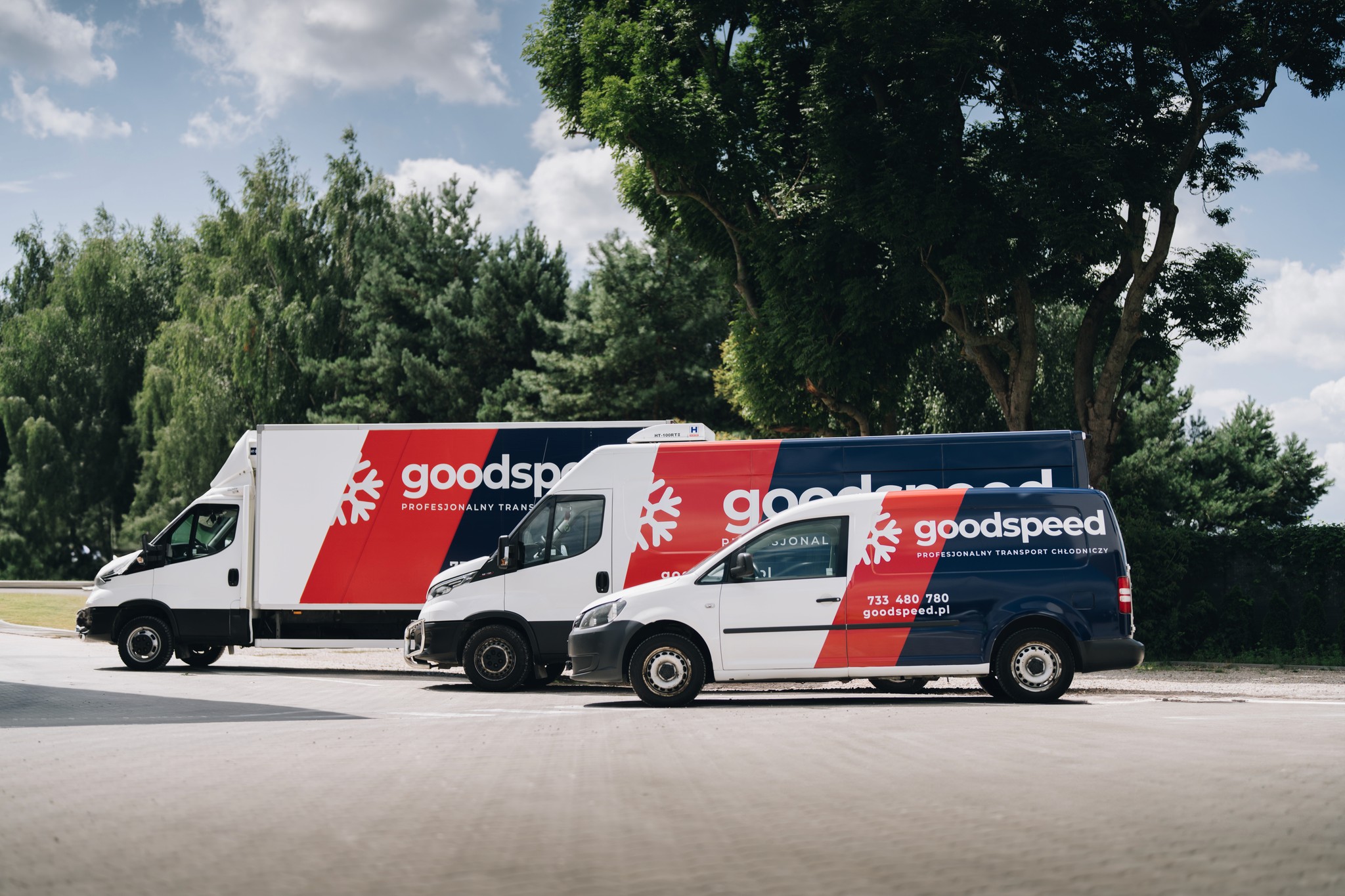
Goodspeed, a leader in cold-chain logistics for producers of diet catering in Poland, lists the following among the industry's most important trends in 2026: market consolidation and growing production automation, the streaming model of customers rotating between brands, personalisation as the market standard, geographical expansion into small towns and villages, international expansion (especially in the Czech Republic), and zero waste.
Diet catering market in Poland in 2026: trends that will change the industry. The Polish diet catering market is approaching a value of PLN 4 billion. 15% of Poles say they use meal box diets, and PMR Market Experts by Hume’s forecasts point to growth to PLN 5.4 billion in 2029. Here are the key trends for 2026 from the perspective of the Goodspeed group:
1. Consolidation and a smart approach - scale versus strategy
The number of catering companies has fallen in recent years from over 600 to around 400. The biggest players are investing significant funds in automation and infrastructure. But the market still has room for smaller brands – if they have the right strategy.
At Goodspeed we increased warehouse capacity by 70% to 3,900 m², serving over 230 producers. Among them are both large players and smaller brands that have found their niche – customisation of the offer, specialist diets, local quality. Consolidation is a fact, but a smart approach and access to the right technological and logistics tools make it possible to build strong brands even in a mature market.
2. Streaming model – customers switch between diets like between series
A fundamental change: over 28% of customers use more than one catering service, and more than half rotate between 2-3 providers. Customers treat catering like streaming platforms - they try, switch, come back. In their case, loyalty does not mean "one brand for a year". It means rotating between 2-3 favourite caterers.
Key data from PMR Market Experts and Foodango.pl: only 14% change provider because of price. They run away from boredom, looking for new flavours and variety. The average price of a standard diet is PLN 60 (versus an inflation-adjusted PLN 85), and the share of orders with discounts has risen from 20% to over 50%. Discounting has become the norm, but it does not build loyalty – menu variety and easy switching do.
3. A diet playlist – personalisation, choice
A menu-choice diet accounts for over around 1/4 of total sales according to Goodspeed data. Customers no longer accept a fixed menu – they want control over their plate. Ingredient personalisation, allergen exclusions, online diet consultations, real-time order modifications – these are no longer a competitive advantage, they are a market requirement.
Companies that do not offer flexibility and choice lose customers to those that allow diets to be composed like a playlist.

4. Production and logistics automation– from luxury to necessity
Automation makes it possible to scale the business without a proportional increase in operating costs – a key capability in the face of shrinking margins.
Raw material prices have fluctuated by 30% since the pandemic. Without systems that automate production, manage orders and control costs (food cost), it is hard to maintain profitability. Systems generate precise production lists and professional labels, taking into account all diets, exclusions and changes – this is a guarantee of repeatable quality and taste.
5. Small towns and villages will generate additional growth
66% of deliveries now go to cities with fewer than 500,000 inhabitants – in 2022 it was 53% (Goodspeed data for 1-3 Q 2025). Small towns and villages generate 40% of sales (three years ago 25%). Goodspeed increased its reach by over 1,000 new locations within a year, reaching 6,000+ cities and towns.
Remote work, migration from large urban centres, growing health awareness – everything is working in favour of small towns. A model that used to work only in Warsaw now scales in small towns from Podlasie and Lesser Poland to the Tri-City area. These are the locations that will drive growth, because there is a huge group of new customers here.
6. Logistics as part of the customer experience
Own transport is a major cost, and outsourcing reduces it by ten to several tens of per cent of total costs. Goodspeed delivers tens of thousands of parcels every day with a fleet of 700+ vehicles.
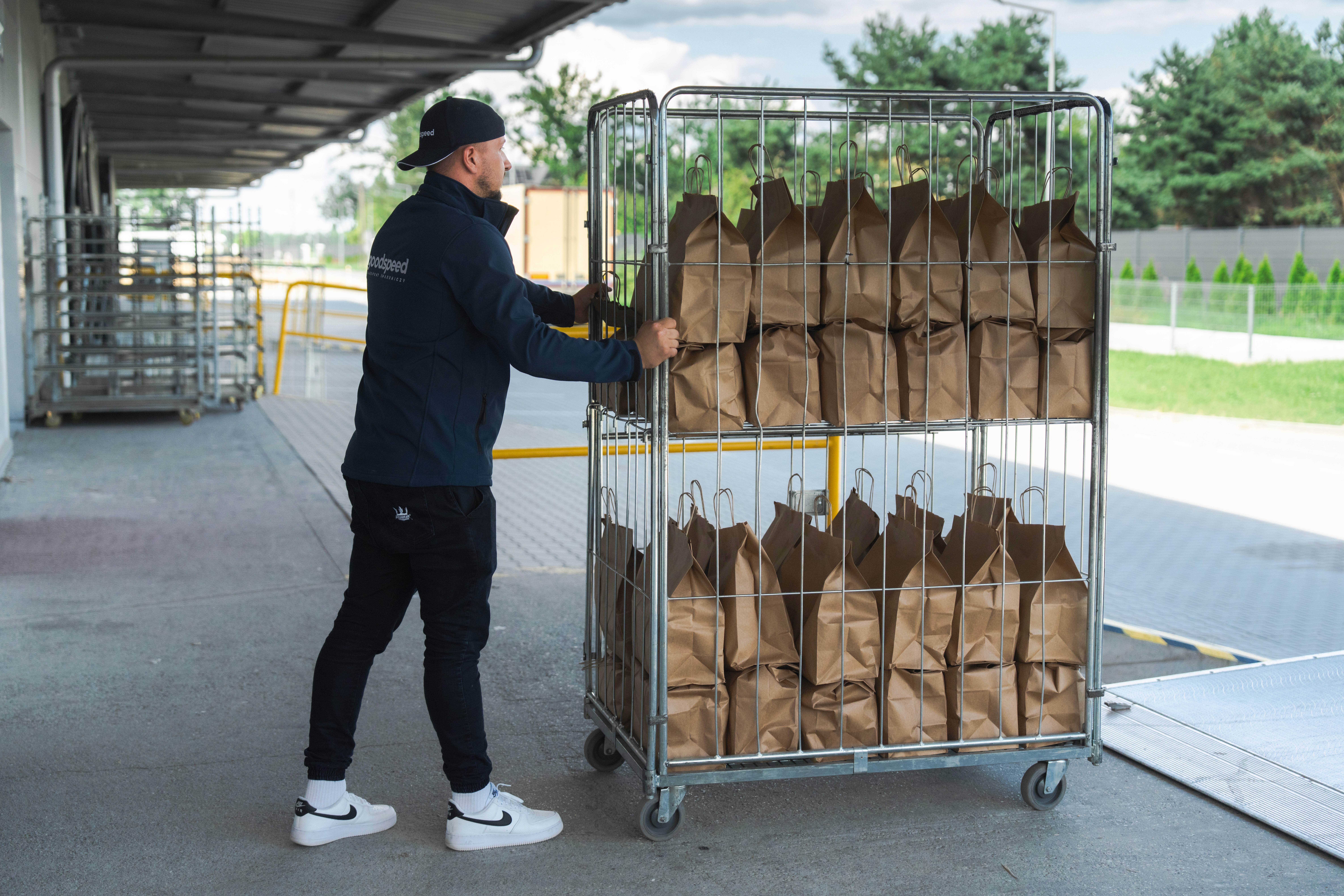
Logistics is part of the customer experience. On-time overnight deliveries directly to the door affect retention in an industry where switching between brands is the norm. Customers remember how much they paid for the diet, but even more they remember whether they found it at their door in the morning.
7. The Czech Republic – a new market at the start of growth
Only 35% of users in the Czech Republic had used catering before 2024, 66% plan to continue in 2025. The Czech market is only just being built - competition is minimal, consumer awareness is growing.
This is the ideal time to enter. Goodspeed is already handling deliveries there, offering producers ready-made infrastructure – without the need to build a fleet and warehouses. Polish producers can transfer a proven model to a market that is on the verge of growth comparable to what Poland experienced in the last decade.
By entering the Czech market, we are not only offering cold-chain logistics – we are bringing there the entire catering and technology ecosystem proven in Poland. This unique combination of fleet, an app for managing deliveries and systems such as Caterings.pl and Foodango.cz enables producers to scale their business at lightning speed without building infrastructure from scratch. As a result, the market in the Czech Republic can develop much faster, starting immediately from the level of mature operational solutions that we have developed in Poland over many years – says Marcin Kichner, Chief Business Officer at Goodspeed.
8. Zero waste – from trend to business model
56% of Poles admit to wasting food at home (Food Bank 2023 data). Diet catering naturally reduces this problem – you buy exactly as much as you will eat. But the industry is going further.
Goodspeed works with Too Good To Go, enabling catering producers to sell surplus production at preferential prices instead of throwing it in the bin. Saving meal-box diet packages – production surpluses – is an additional sales channel for catering manufacturers.
Summary: A mature but not saturated market
2026 is the year of automation, geographical expansion into small towns and international expansion. The market rewards those who understand the streaming model – customers are not looking for one brand forever, they are looking for a portfolio of brands tailored to changing needs. The winner is the one who has the tools, infrastructure and strategy – not necessarily the biggest, but certainly the most agile.
See more
Latest entries













Join Goodspeed
From production to the last mile – everything in one Goodspeed ecosystem.
Join Goodspeed
From production to the last mile – everything in one Goodspeed ecosystem.
Join Goodspeed
From production to the last mile – everything in one Goodspeed ecosystem.